
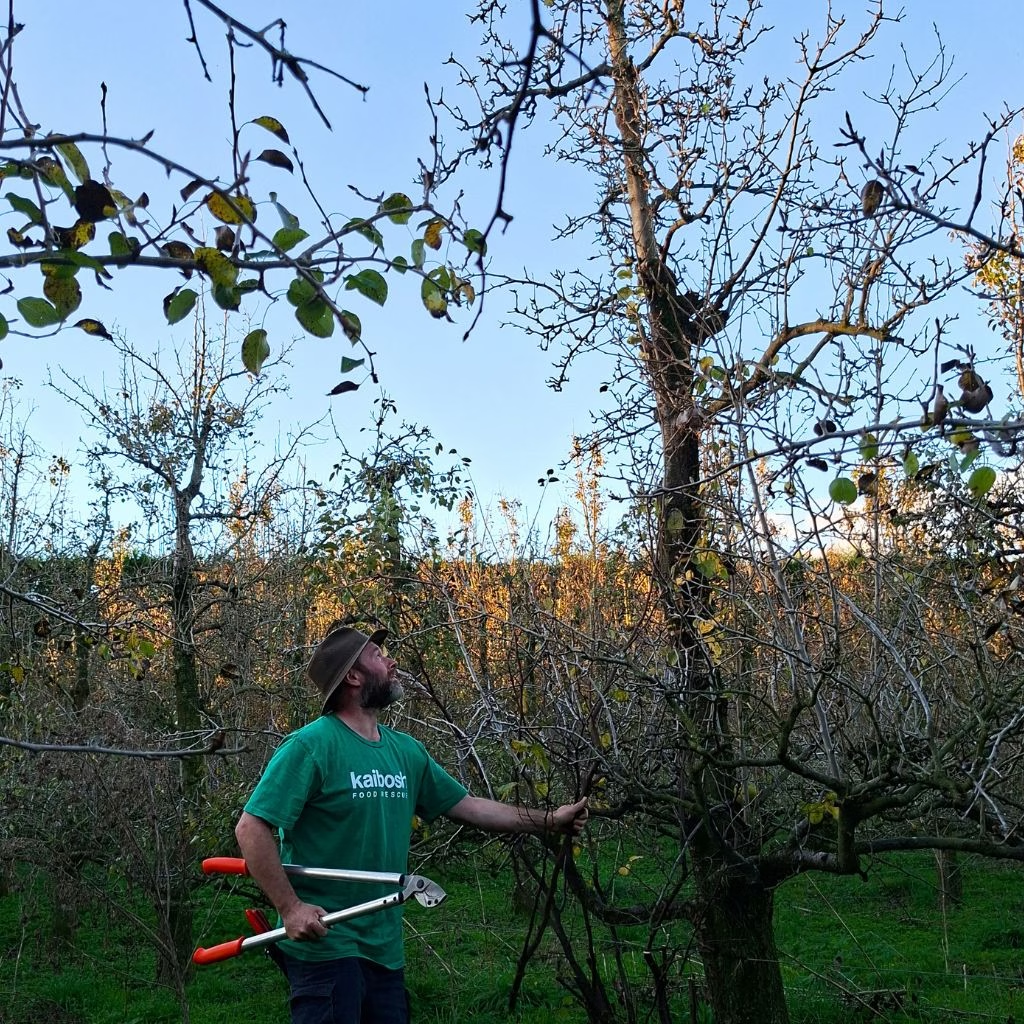
For anyone wondering what business Kaibosh has pruning trees and hanging around in orchards… find out more about this project in Ōtaki and how it got started! With personal reflections from Hane and Hannah connecting this mahi to our wider kaupapa, after a season out amongst the pear trees.
Partnering with Tracey’s Orchard
For the past five years, Tracey’s Orchard – passionate local organic orchardists – have generously donated “second tag” fruit to the community through Kaibosh. This fruit wouldn’t make a commercial return, but it’s been a welcome cornerstone of the Kāpiti and Horowhenua supply, with Tracey’s providing an average of four tonnes a year for good causes.
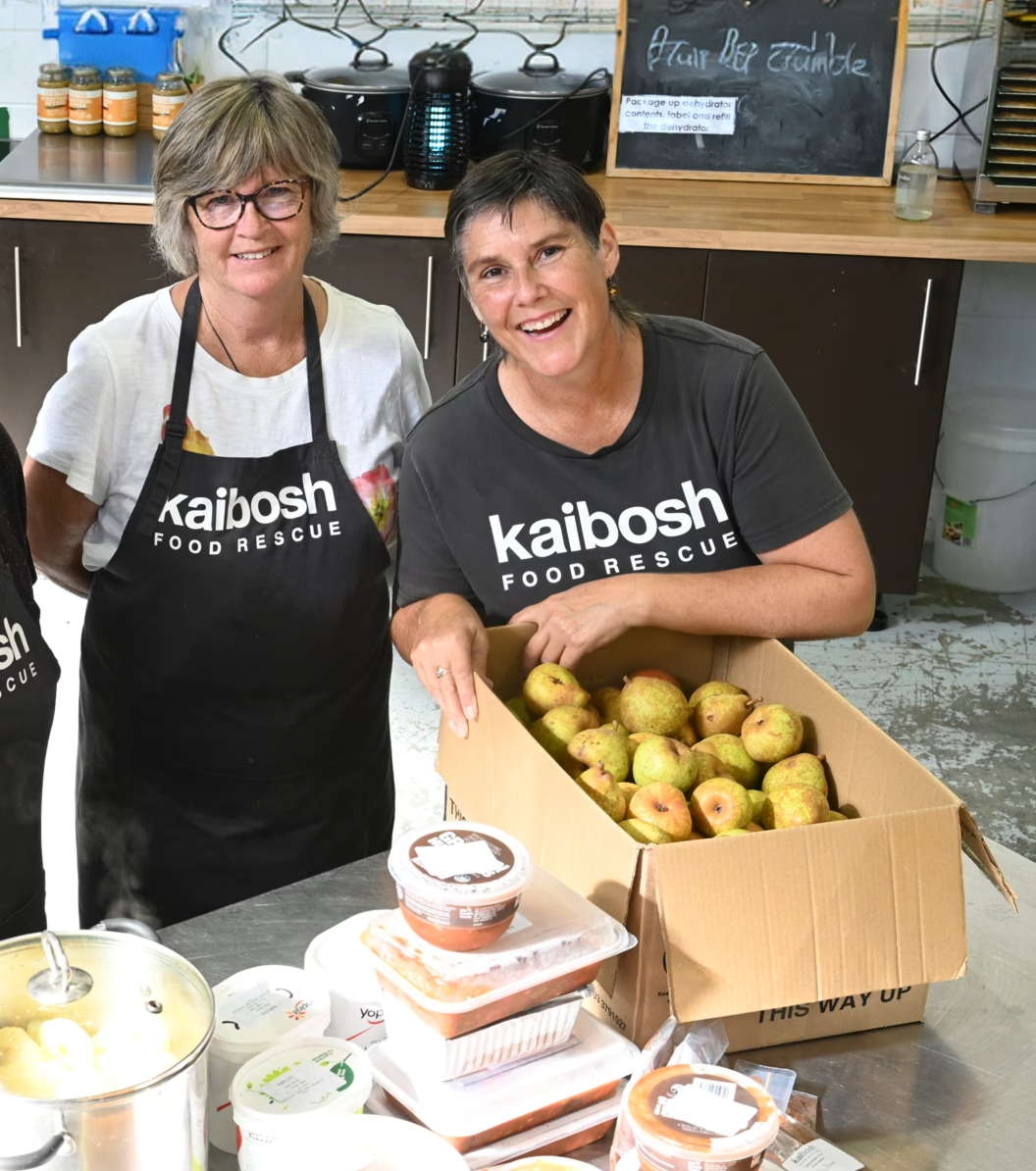
A couple of seasons ago, one of the pear blocks got a harmless but commercially damaging disease, and with no return to justify maintaining the trees, the block laid dormant – decades of cultivating heritage pear varieties at risk of being lost, along with all the knowledge and hard work that went into them.
After a few conversations sharing ideas and dreams with Keltie (Kaibosh Kāpiti Operations Manager), we were invited on to the block this year to see if Kaibosh could help regenerate it. If we succeed in breathing life back into the rākau (trees), the Tracey’s committed to donating the entire crop to the community.
With our new captain Hane (Kaibosh Second Harvest Coordinator) and community participation from volunteers, local high schools and wānanga, we’ve made a significant step toward securing consistent fruit supply for the whole region. Over 400 productive pear trees should produce approximately 35 tonnes of fruit – a 900% increase in volume of fruit donated by Tracey’s Orchard for local people in the future.
But this isn’t about the numbers.
This is collective ambition. Community collaboration. Skills and knowledge sharing. Training and education in real life, with real-world impact. From our hands to our schools, our friends, our cousins – our communities.
Building the team: Hane’s reflections
Hane Johnsen, Kaibosh Second Harvest lead, sums up the whole effort simply:
“Pruning is a job best shared.”
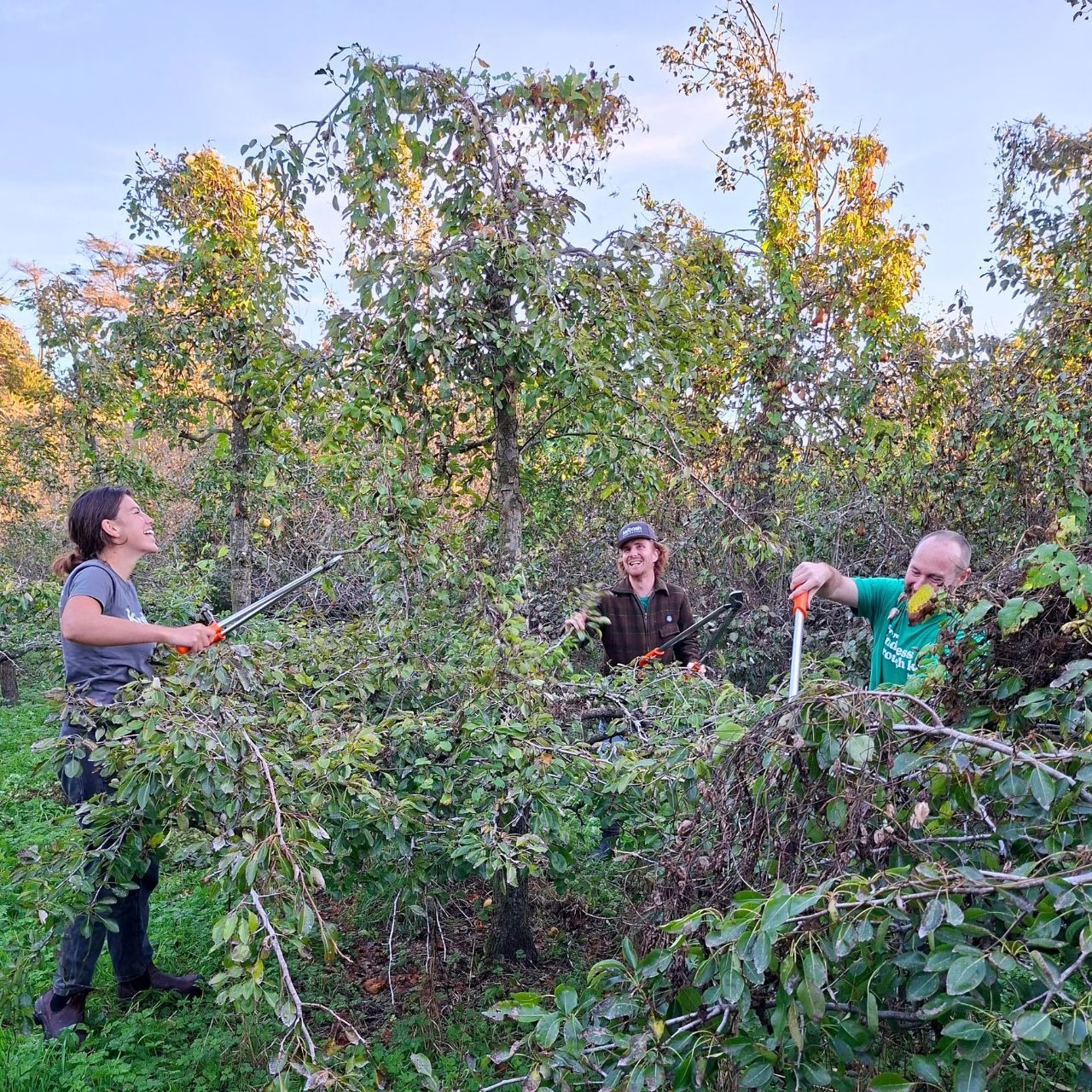
The team has grown steadily since it started. Although, Hane wasn’t sure at first whether they could pull together the people-power the job needed:
“I was unsure it would be possible to gather the people power for this pruning mahi, and the desire to show up for our orchard for the foreseeable Winter.
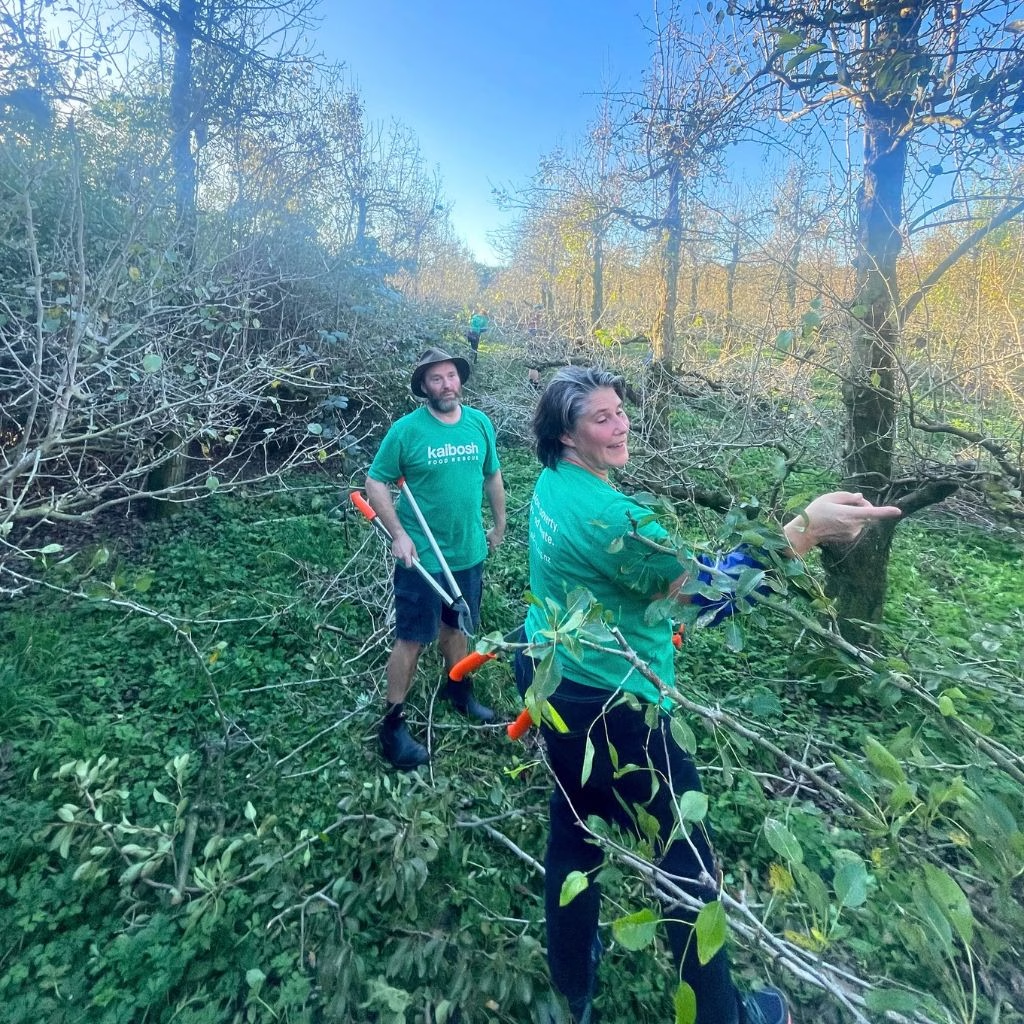
We have grown into quite a substantial team…people all over Wellington region have joined the Second Harvest team pruning our orchard, since April 24th 2026, through winter ’til August 27th”
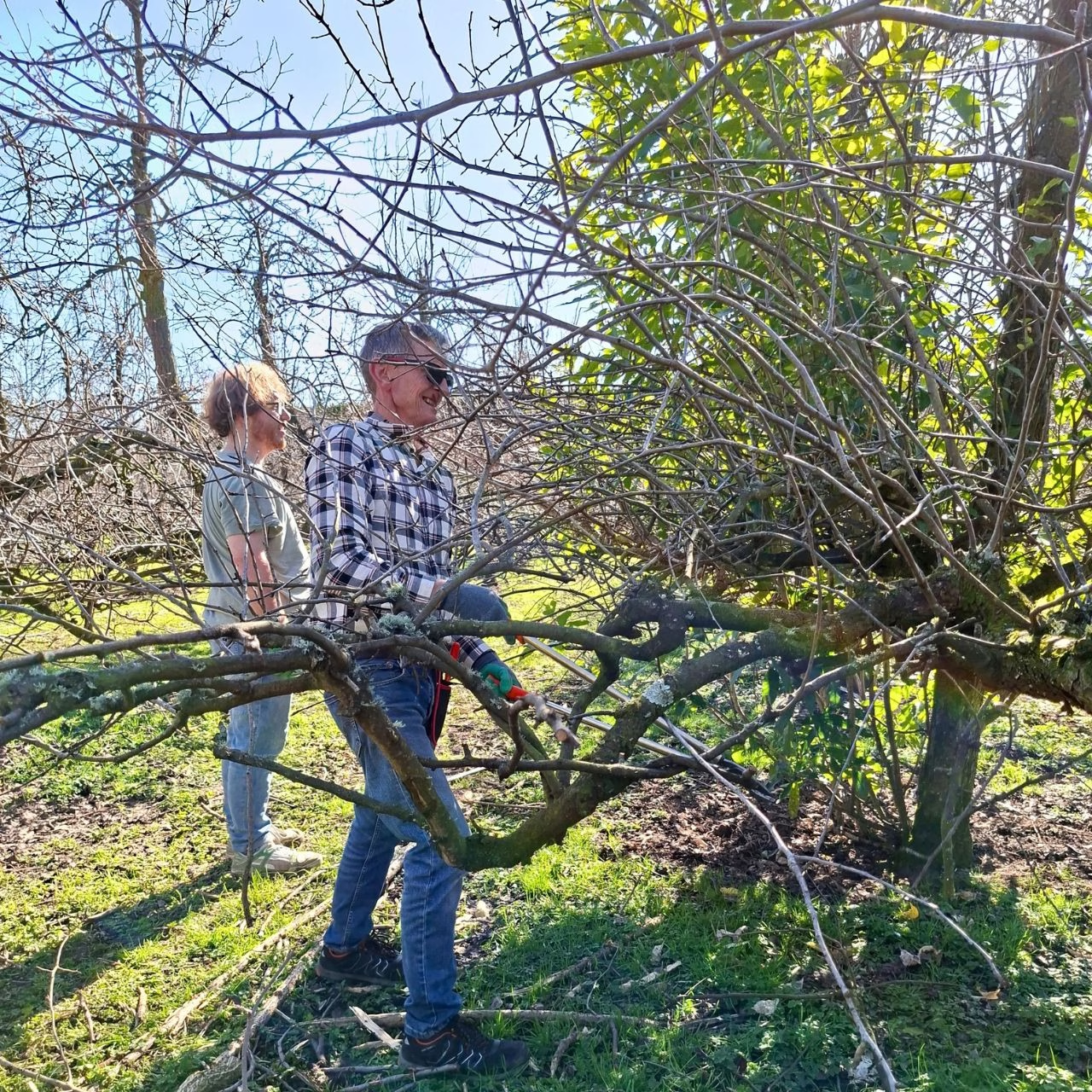
The job was in fact expected to be a challenge – the orchardist told them it usually took six people six weeks, five days a week. Thankfully that was an estimate for a bit more orchard than what Kaibosh were put in charge of. The team settled into a rhythm, rotating through pear varieties each week with the Tracey’s guiding them on each tree’s nuances.
A highlight in mid-winter was hosting the Papataiao class from Ōtaki College – a milestone for the team, with this generous orchardist taking time to be there to teach the students in the orchard himself. As Hane tells it, he was once on the receiving end of that same generosity:
“He said that when he grew into the horticulture industry, he found the community open to sharing knowledge and supportive.”
Then, it’s been the team’s turn to pass it on to every new person who came through with Kaibosh this year.
On the ground: Hannah’s first pruning season
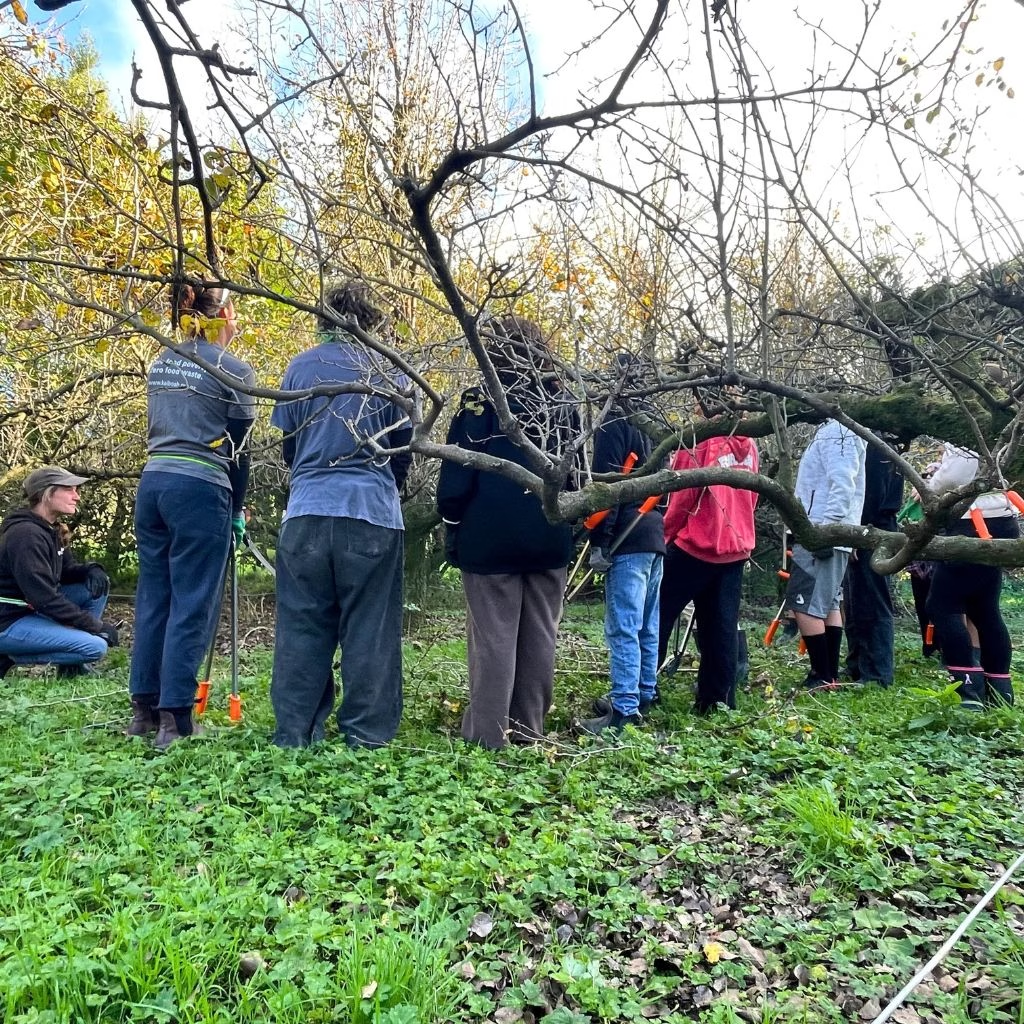
Hannah Newland, one of the volunteers who’s been pruning alongside the team, described what it’s actually like learning to read 40-year-old heritage trees:
“The sheer number of trees that would need pruning was not obvious to me from the beginning. It was a very different pruning style to the olive trees I was used to, and each row was a different tree type that was overgrown in a different way.”
She came up with a memory trick for the job – SOUP: Straight-up branches, Overlapping branches, Underneath branches, and Pencil branches. Though she admits, efficiency won out over acronyms after the first few sessions. The trees left their mark too:
“At the end of the first day my arms were covered in scratches. I looked like I’d been in a fight with several feral cats, and the cats had won.”
Round two didn’t go much better – long sleeves paired with shorts, “because I’d be too hot with a long sleeve on.” Feral cats: 2, Hannah: 0. But by the third session, the lesson had landed, and something bigger had come into focus:
“It’s staggering to me that the grower would be so generous as to essentially donate an entire field of trees to our food rescue organisation, on the condition we prune the trees. If this is the future, where farmers can be connected to their communities to make sure nothing gets wasted… it makes all the scratches worth it.”
When local college students joined for a pruning session, Hannah saw the project’s future written into the present:
“It was clear then that these young people would become some of the future leaders of our food systems, and by supporting us in pruning the trees, they were supporting a potential future for our food systems.”
Connection with whenua & with our kaupapa
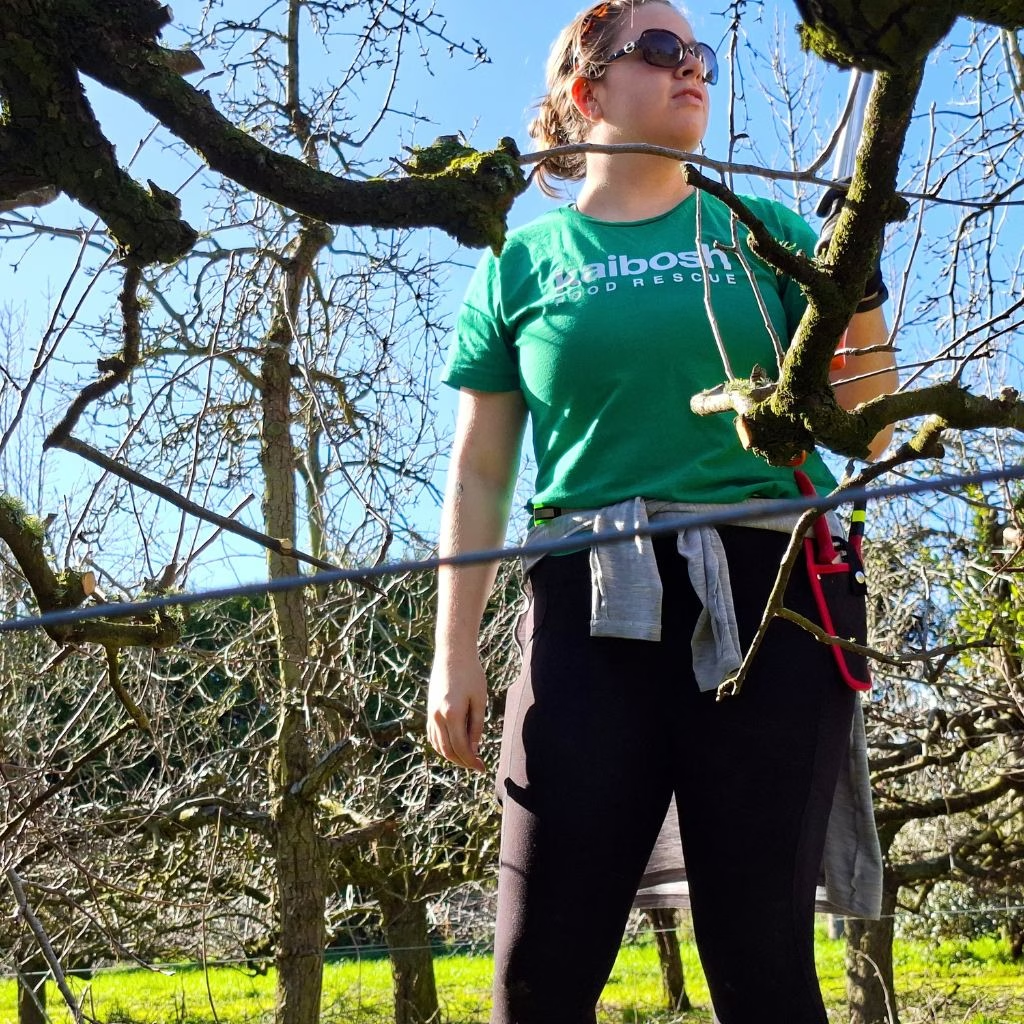
For Hane, time in the orchard also offered something rewarding in the working week:
“Going into the orchard never fails to help me unwind – if you don’t, you’ll usually end up arguing with a tree that whips back or gets stuck into your hair or both. There’re always a few shrieks and ‘ows’ in the orchard but we’ve thankfully all kept our eyes this season.”
Pruners have come from right across the Wellington region – from the city to Kāpiti – and for Hane, that reach says something about what’s possible:
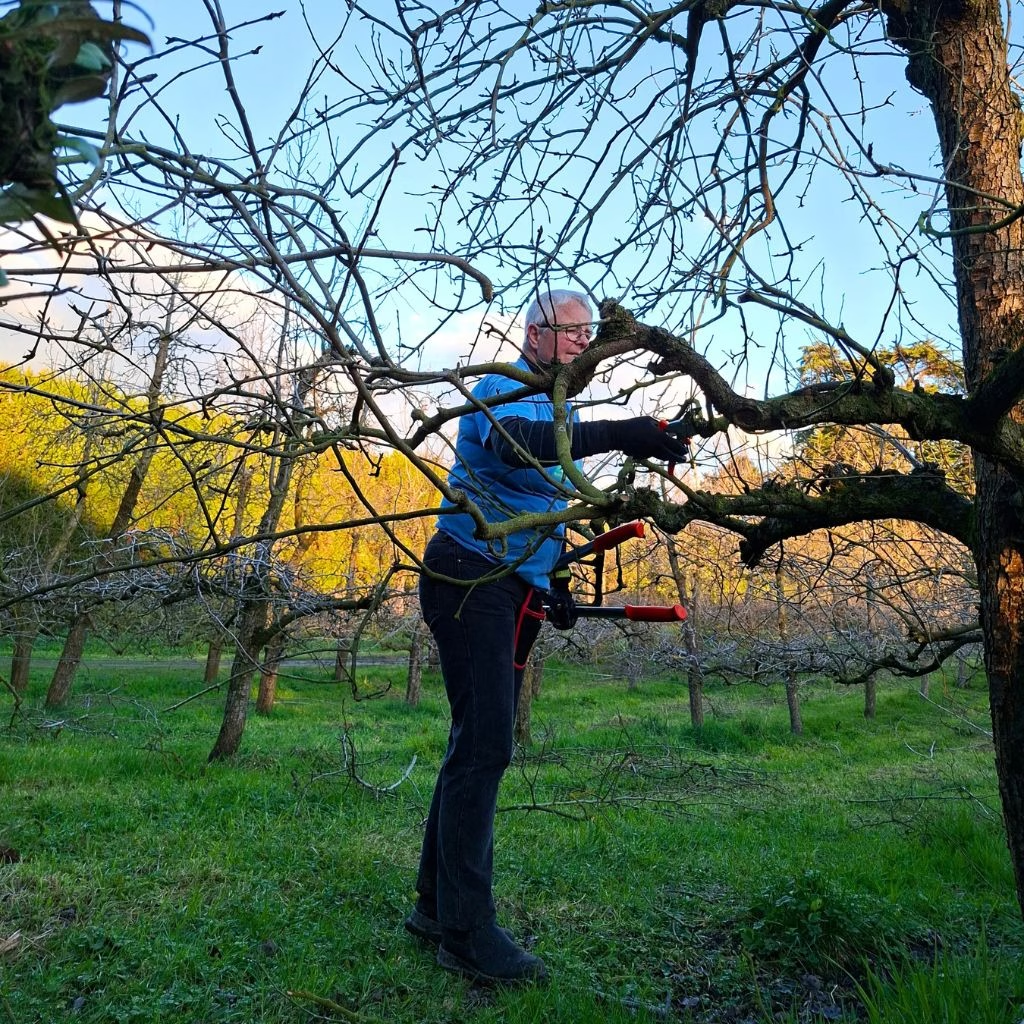
“This orchard shows what a community can do with the opportunity to grow our own food, to nurture our food for the sake of sharing the whole harvest.
“It’s an intention to make available high mauri kai to all reaches of our Wellington regional community because mahi shared at this scale is doable. With this plentiful kai we can afford to reach out to all corners of life and treat everyone as a local. I think that’s part of the Ōtaki charm too.”
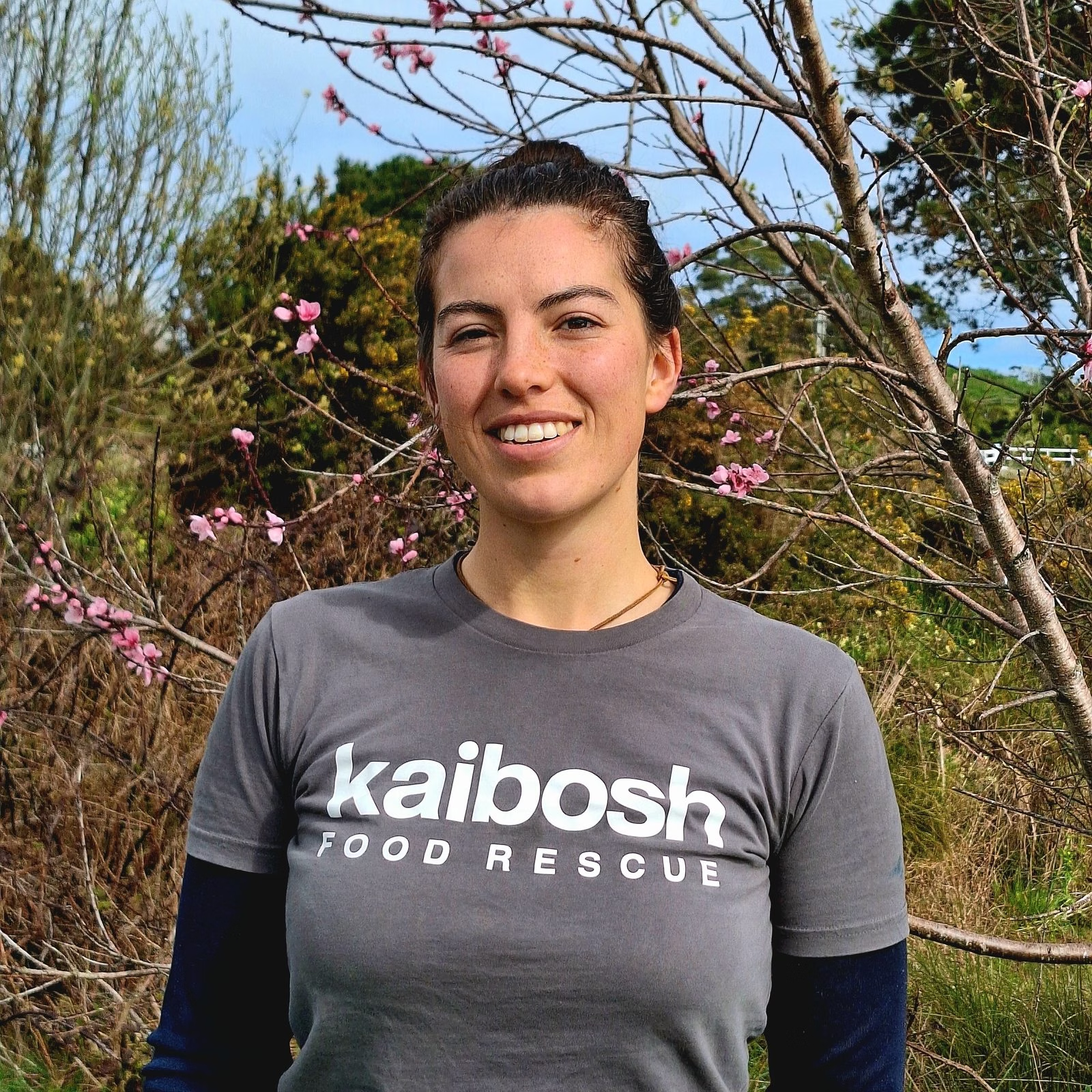
Thank you to everyone who lent a hand with this unique project during 2026 winter.
Learn more about our second harvest workstream and volunteering with Kaibosh and be part of our food movement.
View other stories

October 12, 2026
Humans of Kaibosh: Penny
From small groups, big movements can grow We have plenty of foodies who give time...
September 18, 2026
Fresh shoots, deep roots: Dame Diana is our new Ambassador
Dame Diana Crossan is to follow Dame Patsy Reddy as our new Ambassador. Diana’s fresh...
June 10, 2026
From rescue to resilience: why we’re moving upstream for food security
How can we make sure more good kai makes it from paddocks to plates, so...
June 2, 2026
The little truck that could – and the community that powers it
Why one new truck matters at Kaibosh – and why people matter even more. As...
April 24, 2026
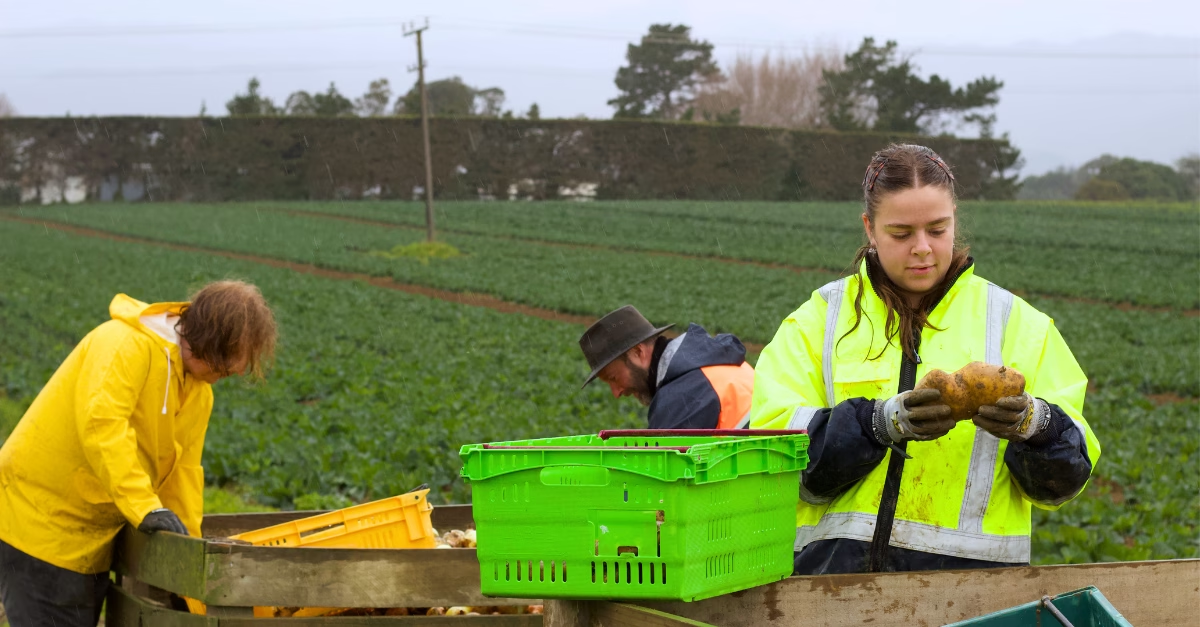
Moving Kai in May – media release
Media release 24 April: Amid rising fuel costs, Kaibosh are fundraising for a new low-emissions large truck to help...
March 16, 2026
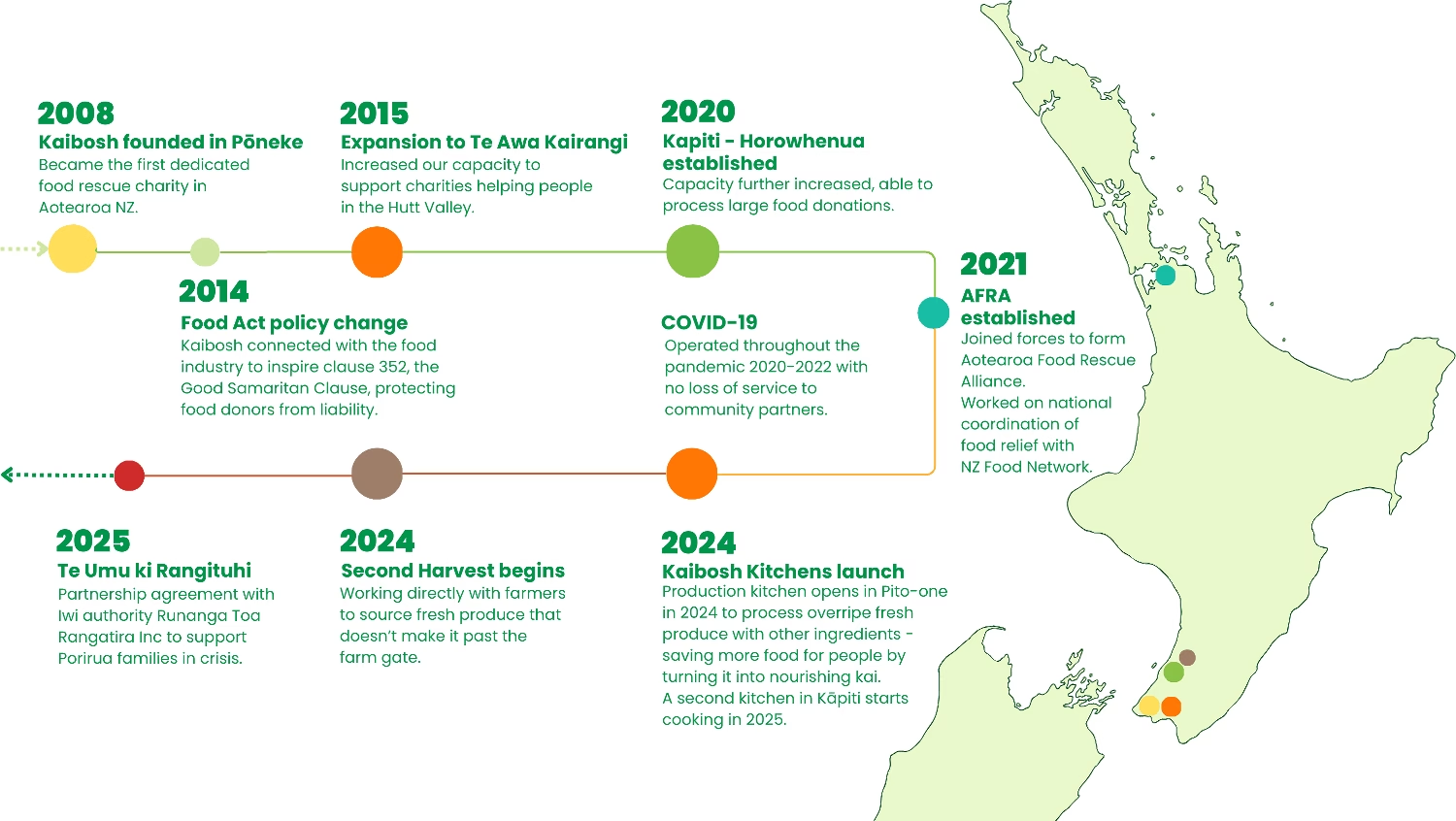
Our Journey
Growing a Movement
March 16, 2026
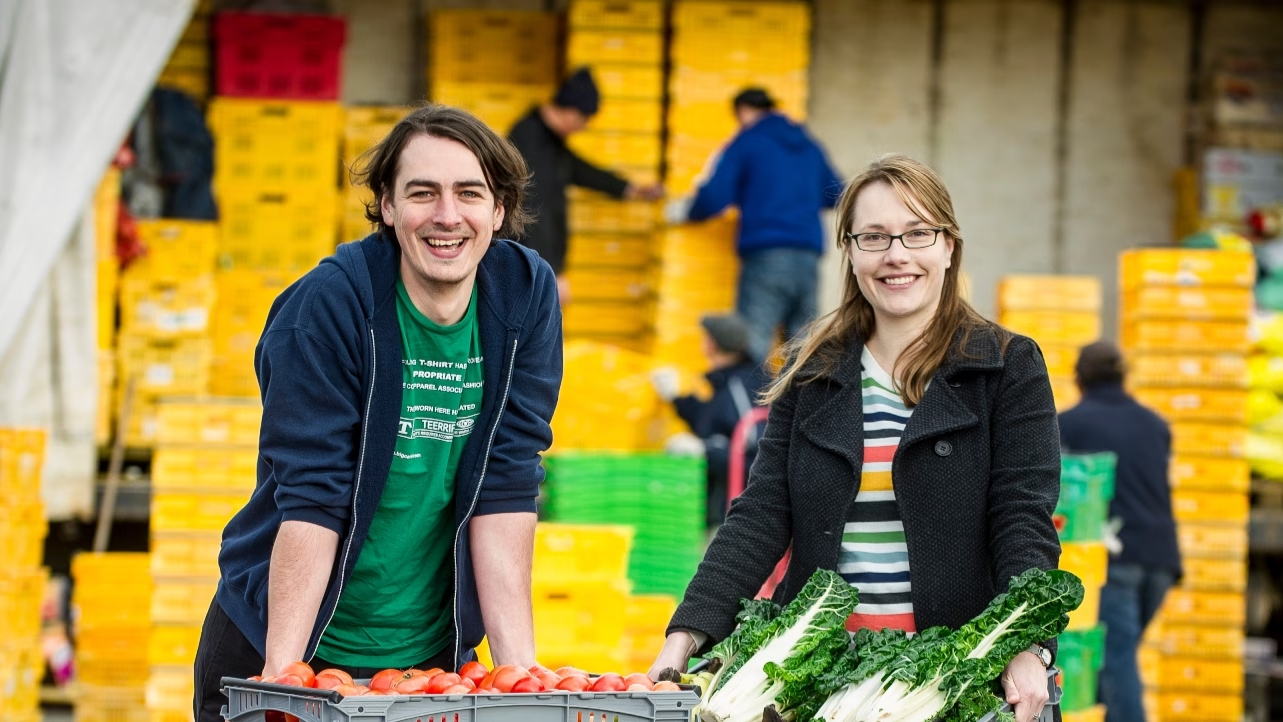
Founder’s story
The history of Kaibosh
December 5, 2025
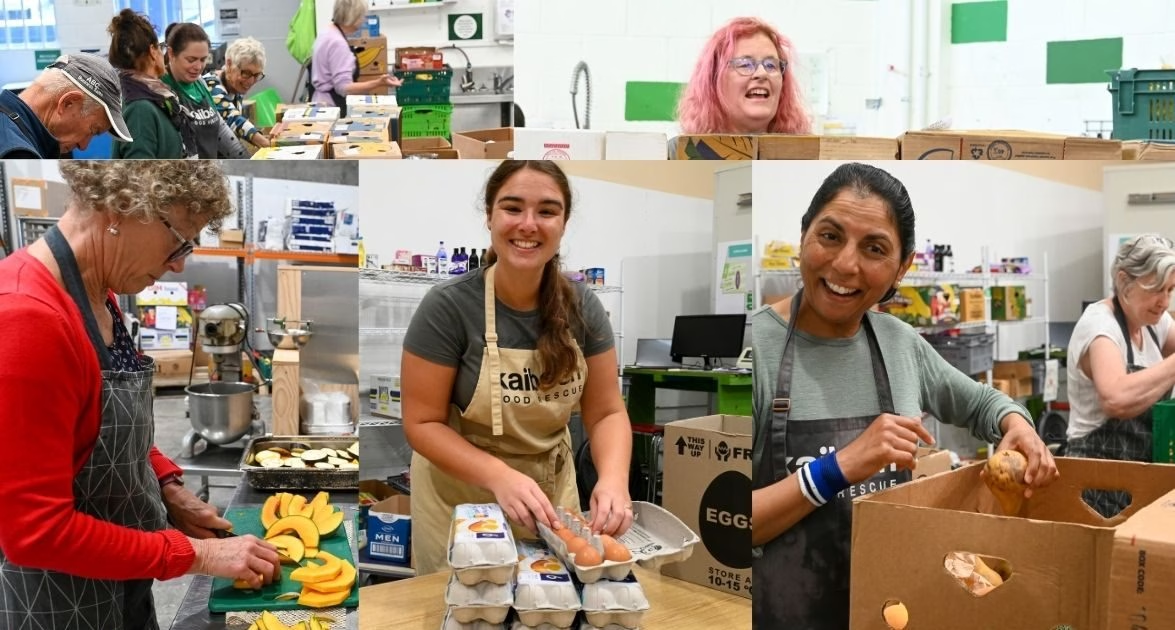
International Volunteer Day 2025 at Kaibosh
Every contribution matters At Kaibosh, we know that a stronger, more connected community isn’t built...
November 14, 2025
Annual Review 2025: More Fresh Kai, More Community Impact
The numbers are in for 2024/25 Together we’ve set a new Kaibosh record! From July...
Help us achieve our vision of zero food poverty, zero food waste
Be part of a community-powered movement creating lasting change.