June 10, 2026
From rescue to resilience: why we’re moving upstream for food security
How can we make sure more good kai makes it from paddocks to plates, so it reaches everyone?
Last month Kaibosh board member Toni reflected on The Little Engine That Could and the power of community action. This time, with co-author Alex (our comms and marketing lead), the food distribution challenges in Aotearoa are unpacked along with why moving upstream is one of the solutions. Settle in with a cuppa to enjoy this 7-9 minute read.
Behind every rescued crate of good kai we rescue sits a bigger question: How can a country that produces enough food to feed millions still have households struggling to access fresh, healthy food?
The answer is complex. Food poverty and food insecurity is shaped by many factors, from household incomes and housing costs to transport, distribution and market forces. On top of this, more frequent extreme weather – driven by the climate crisis – is causing havoc to food supply chains and primary production.
Yet one challenge stands out to us at Kaibosh: too much good food is lost or wasted before it ever reaches people’s plates.
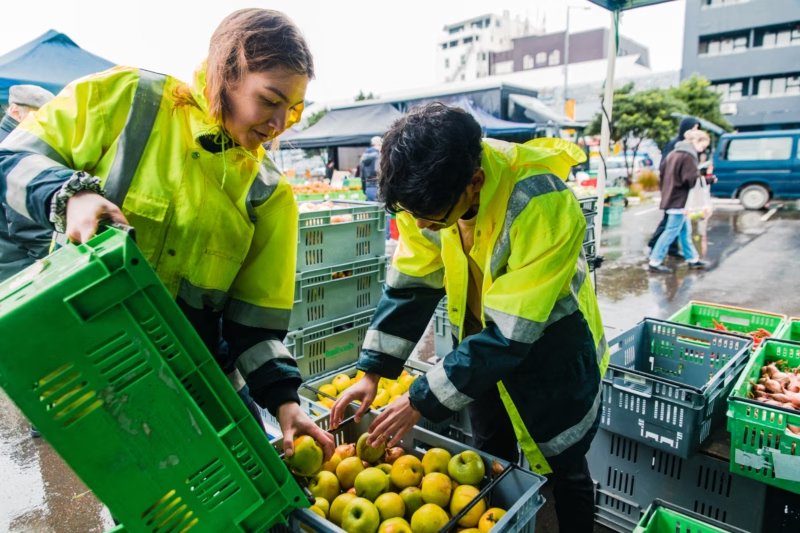
The steep food security challenge
Aotearoa’s food system is vulnerable in an increasingly uncertain world. Climate change, energy constraints and supply chain disruptions only add to the challenge.
We may like to think of ourselves as a ‘land of plenty’, but Dr Catherine Knight argues our food system is more fragile than we assume – and we urgently need a national food security strategy.
At the Reality of Everything symposium in June 2026 Dr Knight delivered a food security briefing, stating: “For society, environment and the climate – this system is both inefficient and harmful... (cont) We must reduce food waste at every step, from farm to plate.”
Following the 2026 E Tipu NZ Food and Fibre Summit, FoodHQ CEO Dr Victoria Hatton put it plainly in her reflections:
“Food waste is not a side issue to food security. In a country that produces enough for 40 million people, food waste is the mechanism by which abundance fails to translate into access.”
dr victoria hatton
A National Science Challenge report in 2024 focused on food systems and disaster recovery, whether that’s post-earthquake or following a regional flooding event. The recommendations were: future proof funding for food system resilience, enhance food system sovereignty and equity, and advance food system diversity.
Our food insecurity problem is not a production problem. It is an access and distribution problem. Too much good kai is lost, wasted, or never reaches the people who need it.
The challenge now is connecting and scaling what works, so abundance can translate into access.
The good news is that many communities, growers, researchers, food rescue organisations and innovators across Aotearoa are working on practical ways to bridge the gap between food produced and people’s needs. From cutting-edge technology in orchards (more on this below) to volunteers helping to harvest surplus crops or picking extra fruit in neighbourhood backyards – solutions are emerging at every level of the food system.
Finding where food loss occurs – and why we’re focusing upstream
The first food loss and waste report for Aotearoa, produced by Otago University, found that 1.22 million tonnes of food is lost or wasted in Aotearoa every year – equivalent to 237kg per person – with 37% lost at primary production stages (0.46 million tonnes).
Most of us are familiar with household food waste. Food rescue organisations have typically focused on supermarkets or food manufacturers, helping them to reduce food waste.
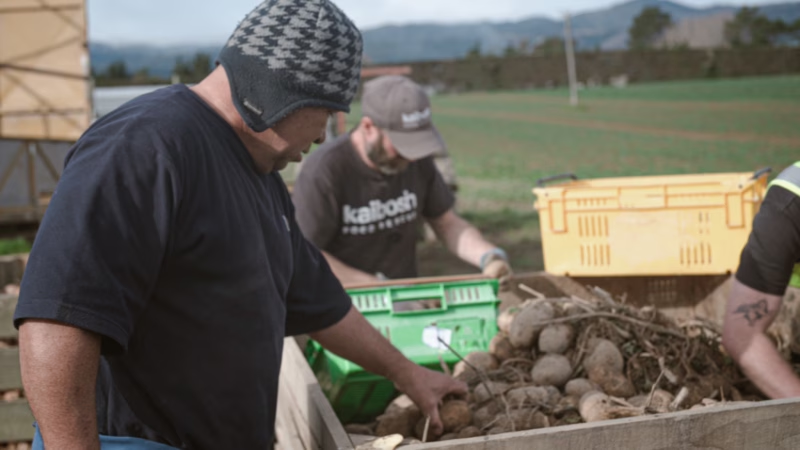
Less visible to many of us is food loss that happens before food even makes it to the stores. At the growing, picking, packing and processing stages, food can be lost because of unpredictable weather, storage gaps, or due to high cosmetic standards – whole deliveries are sometimes rejected outright if some of the produce doesn’t meet retail visual standards. Or, it may be due to labour shortages, or simply (tragically) because it is cheaper to discard than distribute. Produce which has no profit is usually mulched to nourish soil in paddocks, however much of it is still good quality edible food.
There is good news here. Across the country, innovative organisations and companies are stepping up. Hectre was a stand-out of the 2026 NZ Hi Tech awards – a company focused on helping growers measure fruit production more accurately and reduce orchard loss, earning both the Agritech Innovation award and the Hi-Tech Māori Company of the Year).
These innovations matter. But surplus food will always exist due to ongoing weather events, market shifts, or even crops that don’t grow to spec. And ultimately, our growers want to see their local communities nourished and thriving.
This is where better, more connected up, regional systems can have a significant impact. And, why Kaibosh is working further up the food chain with our Second Harvest programme in Kāpiti and Horowhenua.
With fertile soils and optimal growing conditions, Horowhenua is one of New Zealand’s most underrated food-producing districts, and highly important to the lower-North Island’s food security.
Second Harvest: regional networks, relationships and reciprocity
The first two years of Second Harvest at Kaibosh (2024-2026) has confirmed both the opportunity and challenges: time-sensitive harvests, seasonal supply, logistics, and grower engagement. Surplus often includes produce rejected for minor imperfections or left in field due to labour shortages or low market prices – all perfectly edible.
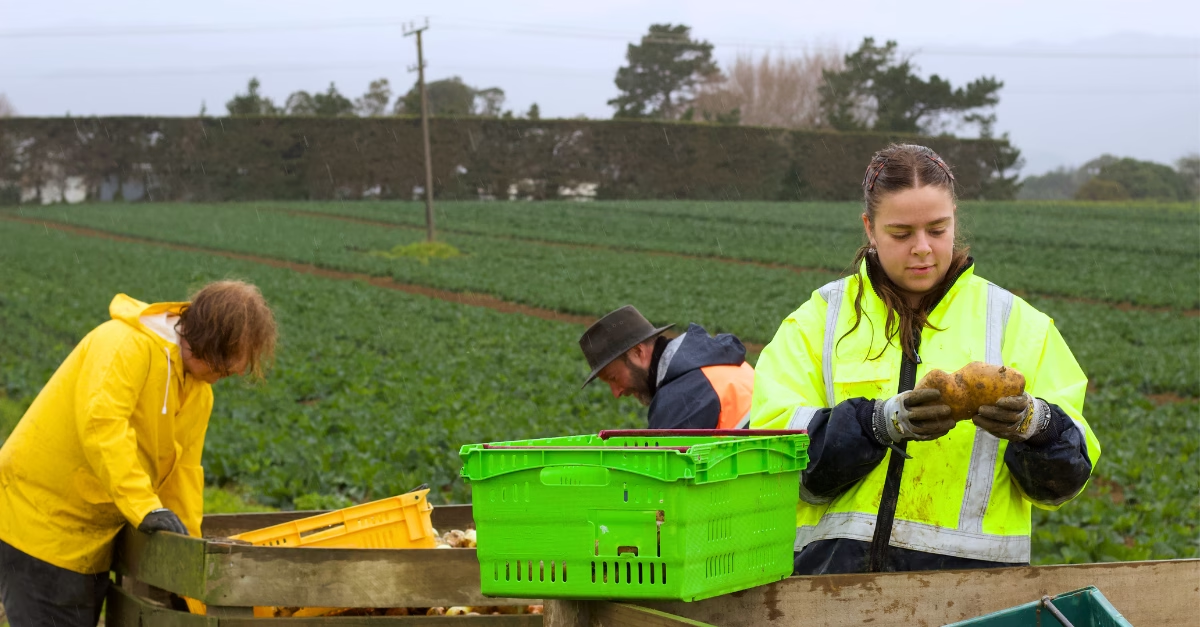
Along the way, through our pilot project, many hundreds of tonnes of good quality farm fresh produce was rescued by local people, for local people. Healthy kai that might otherwise be out of reach.
Beyond the food volumes and logistics, Second Harvest is built on relationships, learning and reciprocity. We’re spending time on the land, getting to know on-farm processes with one of the Horowhenua’s largest vegetable growers. We’ve also recently started a long-term project to help rejuvenate an old pear orchard – hands-on mahi alongside community groups, learning about growing seasons and connecting with where our kai comes from.
This is more than food rescue. It’s people reconnecting with the land, young people learning to cook fresh produce, and communities gaining a deeper understanding of their local food system.
We see Second Harvest as one way Aotearoa can build up a food system that supports farmers, restores the mana of kai, sustains families and honours Te Tiriti.
From surplus to supper: why distribution matters
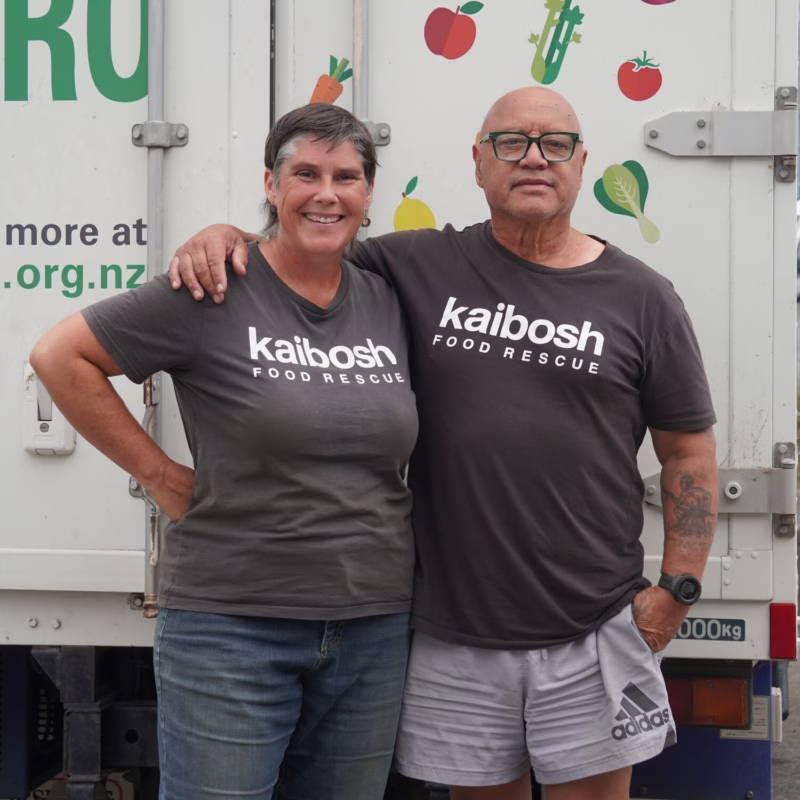
Distribution is the quiet backbone of food security. It’s the trucks, drivers, cold storage, staff, volunteers, food donors, community partners who keep fresh kai moving. Logistics may look like vehicles and warehouses, but ultimately, it’s a people-powered system.
When any part of our food supply chain becomes strained, the whole system feels it. Distribution of good kai matters more in Aotearoa than many of us realise.
Fresh produce often travels long distances from growing regions to supermarket shelves. Compared with countries such as the United Kingdom, our population is spread across a larger land area, transport options are less diverse, and many supply chains rely heavily on road freight operating on “just in time” systems. When fuel prices spike, roads are disrupted, or transport capacity is constrained, the effects ripple quickly through the food system.
Kaibosh sits at this pressure point and sees every day how time-sensitive the movement of fresh kai can be.
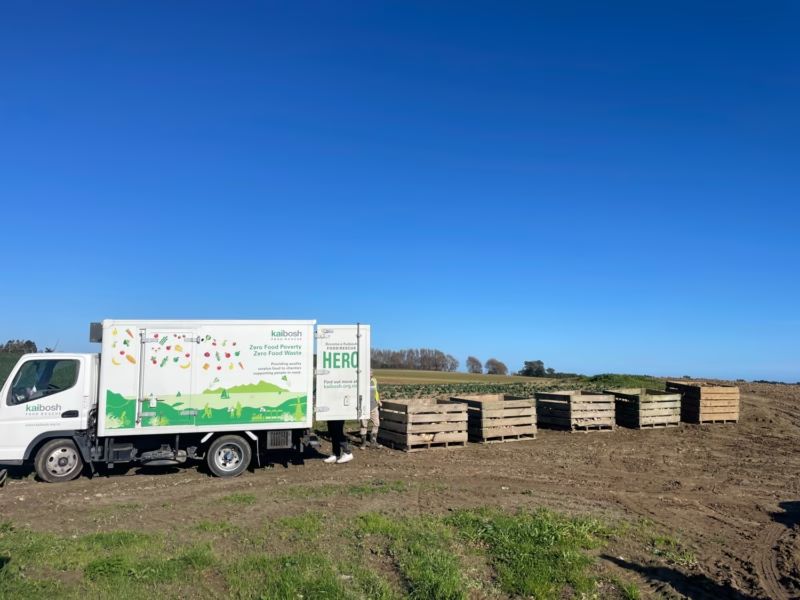
In recent years, with the help of some incredible sponsors and partners, we’ve been growing our fleet of electric vans and working to reduce our carbon footprint while continuing to transport large volumes of fresh food around Te Upoko o te Ika (Greater Wellington Region). But to keep scaling Second Harvest and rescue more farm-fresh kai, we now need a new low-emissions truck for the Wellington region.
You can help: join the food movement
Looking at the bigger forces shaping our food system can feel overwhelming. But if our last blog showed anything, it’s that small collective actions that matter.
Here are a few ways you can help:
- Support food rescue: Donate to your local or regional food rescue organisation. Supporting Kaibosh helps us to keep fresh kai moving today and scale new initiatives – like Second Harvest – for a better food future.
- Volunteer: You can also volunteer your time. With National Volunteer Week just behind us, it’s a great reminder that giving a few hours to food-security initiatives (whether sorting kai, community picking, or supporting our community partners) makes a real, immediate difference.
- Shop local: Seek out regional fruit and veges and eat seasonally when possible. If you’re in Wellington region check out the Kai Ora Vege Co-Op. Or, order direct from a farm or grower, shop at farmers markets or ask your local store where the fresh produce was grown.
- Share homegrown: Crop swaps or pātaka kai/food cupboards help locals to share and trade abundance from our own backyards.
- Start a kōrero: Talk about local food and food system change with friends, whānau and colleagues, because systems change starts with awareness.
- Add your voice: Eat New Zealand has released Vote for Kai Call – Toiora Whakapūmau Kai in June 2026 – a collective call for a just, resilient food system for Aotearoa. Help send a clear signal to political parties ahead of this year’s election by signing the open letter at Action Station.
Moving forward, together
Together, we can build a food system where abundance reaches everyone. Kaibosh will always rescue good kai and get it to where it’s needed most. But we’re also climbing the hill to help fix the system.
Upstream change is where lasting impact happens – and with your help, that’s exactly where we’re headed.
View other stories

October 12, 2026
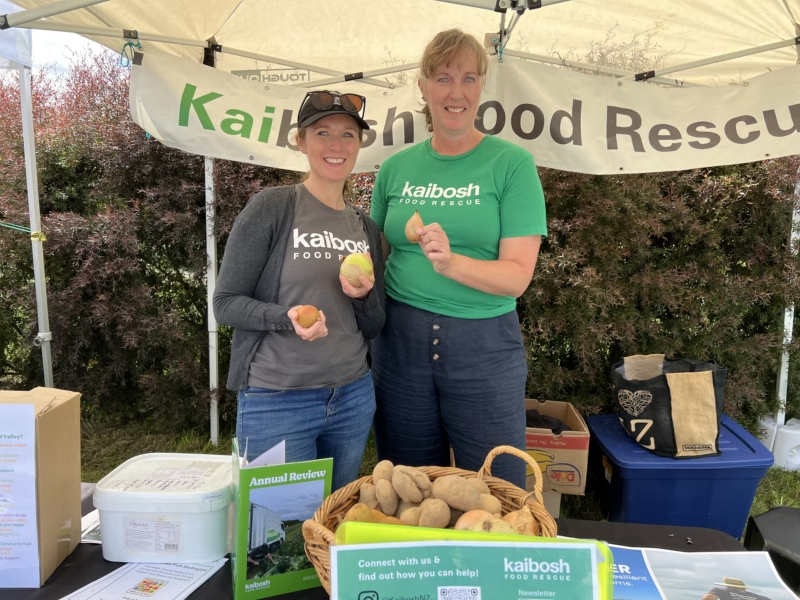
Humans of Kaibosh: Penny
From small groups, big movements can grow We have plenty of foodies who give time...
October 2, 2026
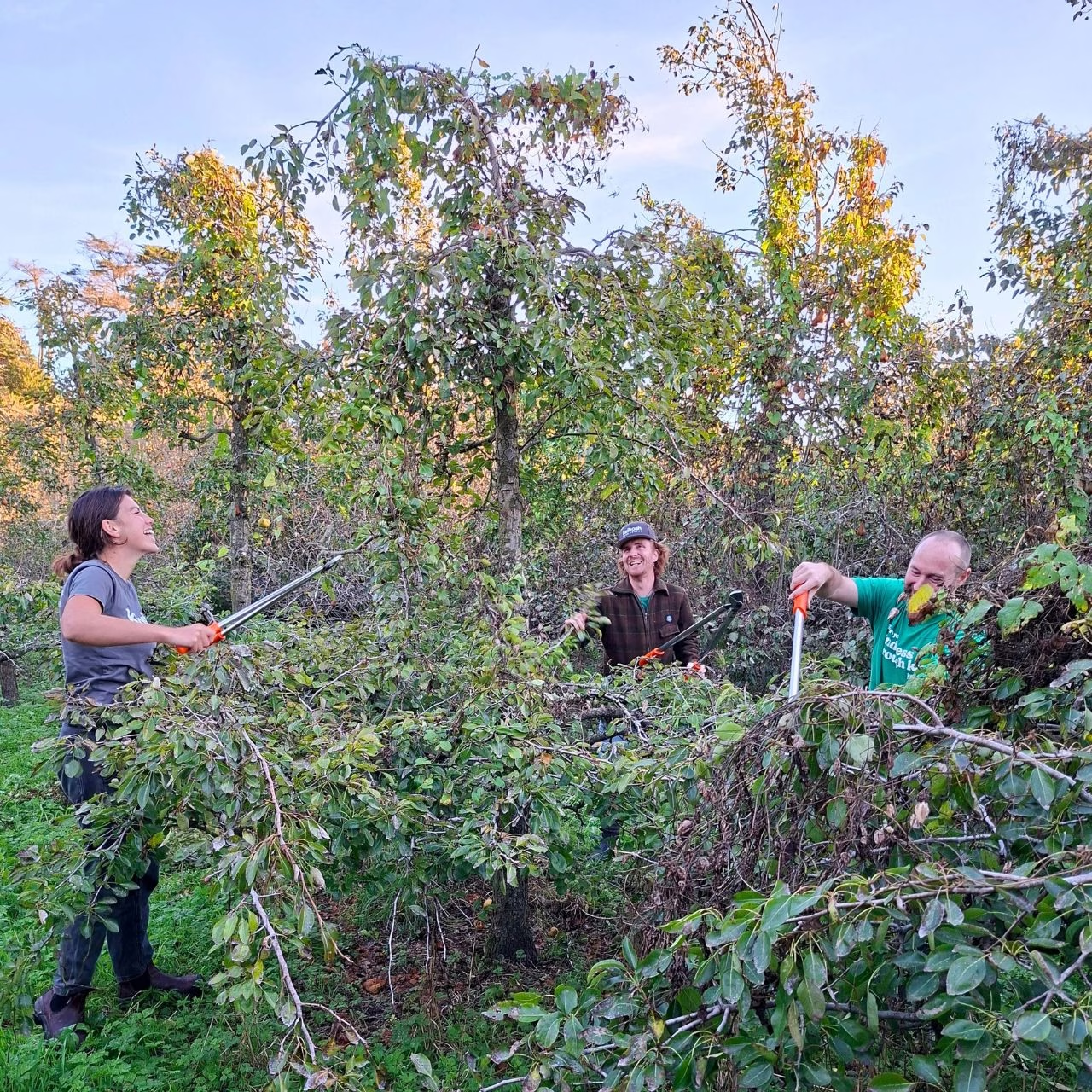
New Kids on the Block: Pruning in Ōtaki
Kaibosh Food Rescue have been hanging out in orchard to prune trees and learn all...
September 18, 2026
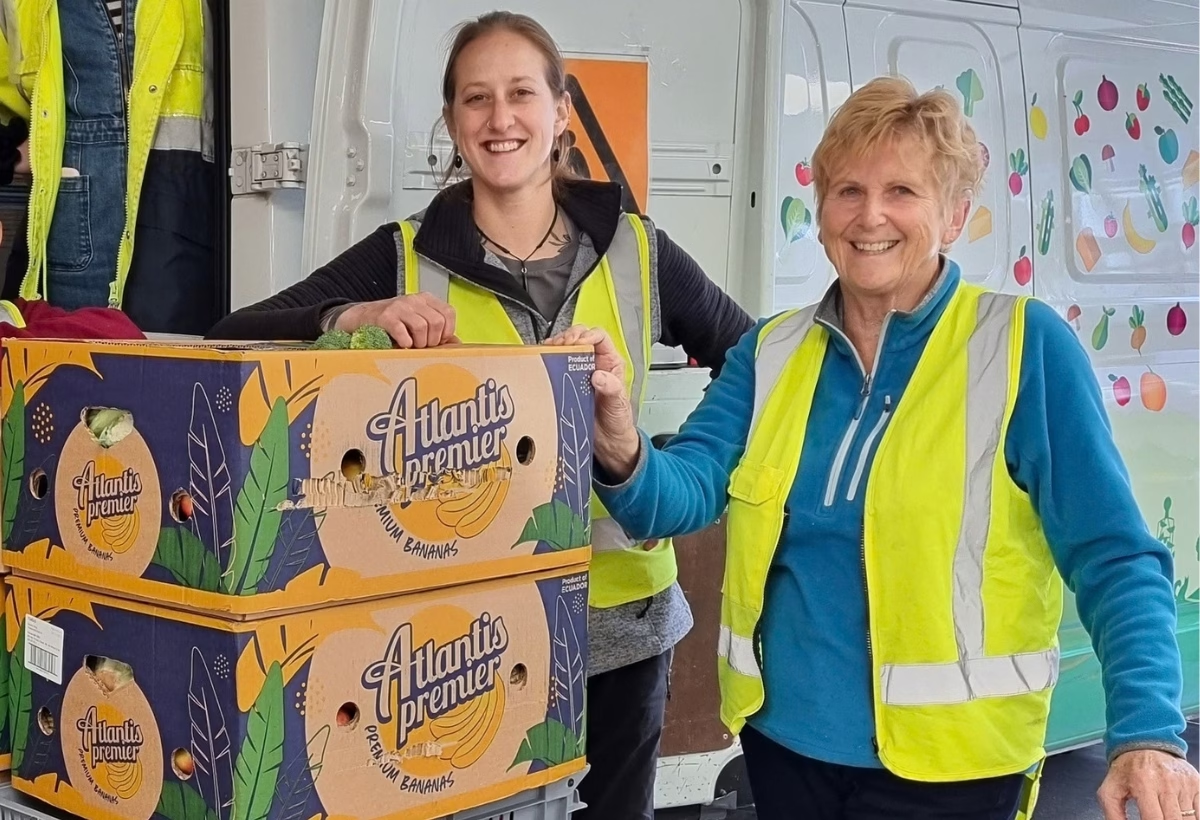
Fresh shoots, deep roots: Dame Diana is our new Ambassador
Dame Diana Crossan is to follow Dame Patsy Reddy as our new Ambassador. Diana’s fresh...
June 2, 2026
The little truck that could – and the community that powers it
Why one new truck matters at Kaibosh – and why people matter even more. As...
April 24, 2026
Moving Kai in May – media release
Media release 24 April: Amid rising fuel costs, Kaibosh are fundraising for a new low-emissions large truck to help...
March 16, 2026
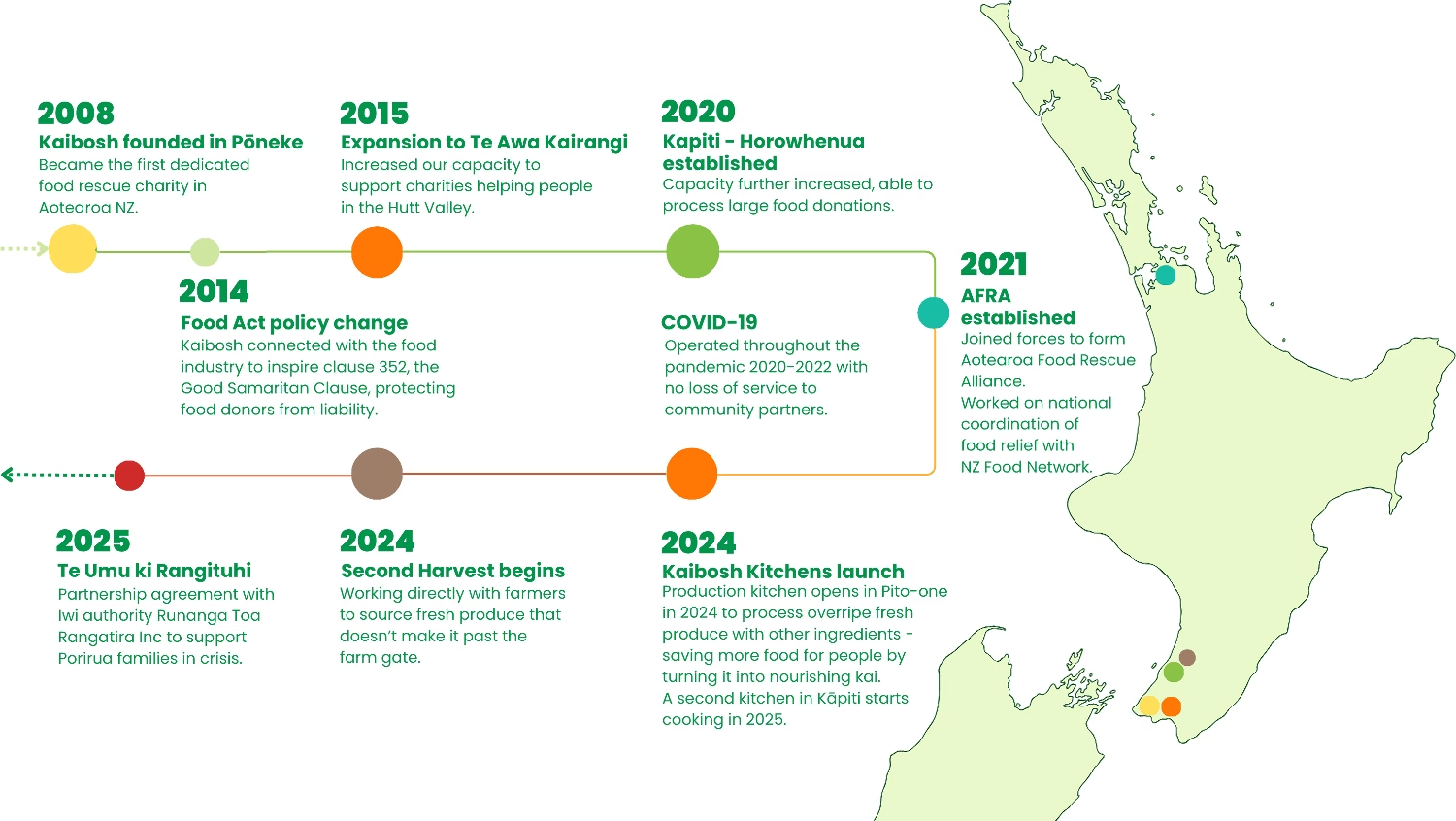
Our Journey
Growing a Movement
March 16, 2026
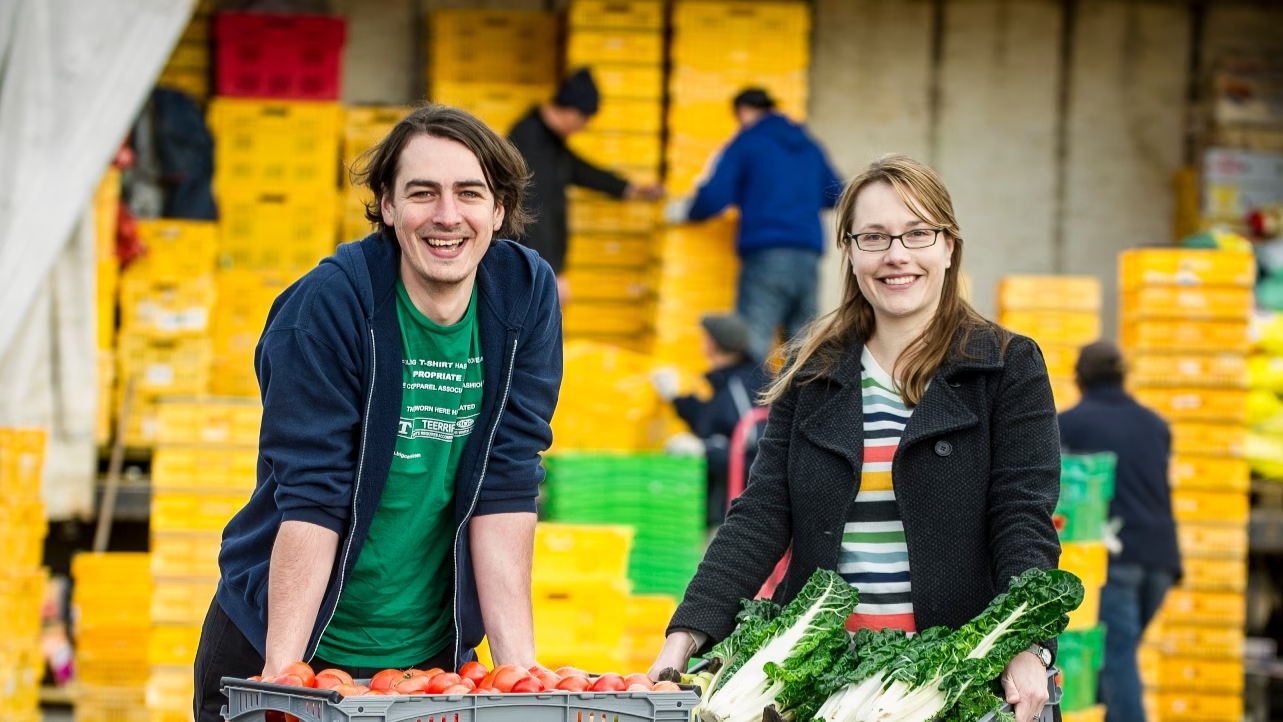
Founder’s story
The history of Kaibosh
December 5, 2025
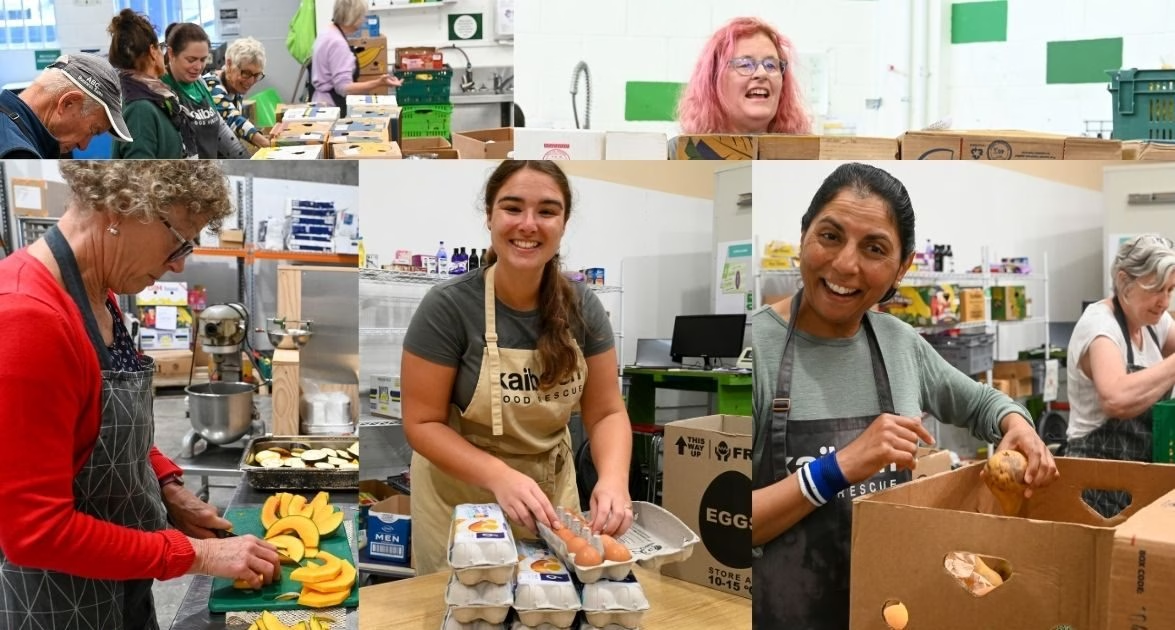
International Volunteer Day 2025 at Kaibosh
Every contribution matters At Kaibosh, we know that a stronger, more connected community isn’t built...
November 14, 2025
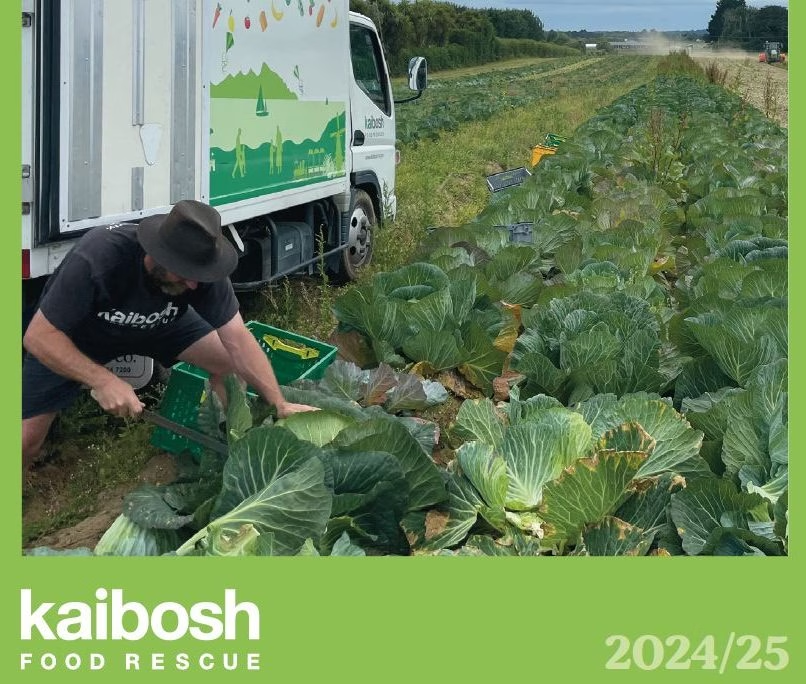
Annual Review 2025: More Fresh Kai, More Community Impact
The numbers are in for 2024/25 Together we’ve set a new Kaibosh record! From July...
Help us achieve our vision of zero food poverty, zero food waste
Be part of a community-powered movement creating lasting change.